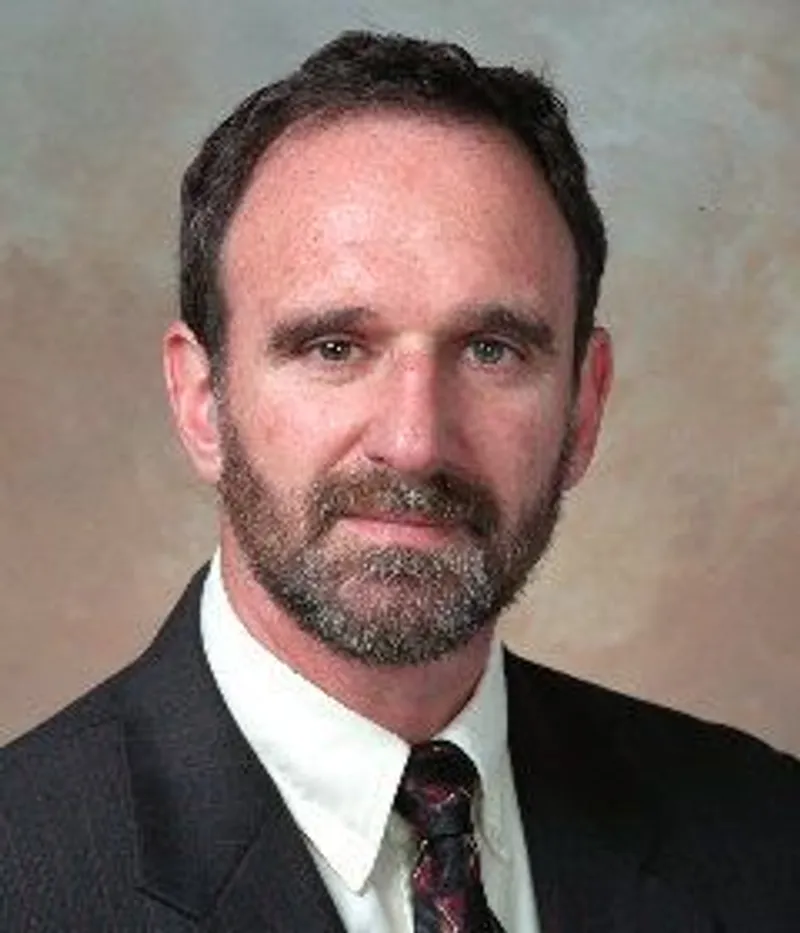
Martin Edward Hellman (born 1945) is an American cryptographer and professor emeritus at Stanford University. Together with Whitfield Diffie, he invented public-key cryptography, a breakthrough that enables secure communication across the internet. Their 1976 paper revolutionized the field and earned them the 2015 Turing Award.
Early Life and Education
Hellman was born on October 2, 1945, in New York City. He showed early aptitude for mathematics and science, earning his bachelor’s degree from New York University in 1966 and his master’s and PhD in electrical engineering from Stanford in 1967 and 1969 respectively.
After completing his doctorate, Hellman worked briefly at IBM’s Watson Research Center, where he began developing an interest in cryptography—a field then dominated by government agencies and considered somewhat disreputable in academia[1].
Stanford and Meeting Diffie
In 1971, Hellman returned to Stanford as a professor of electrical engineering. His interest in cryptography was considered unusual—the NSA was the primary employer of cryptographers, and the field was largely classified.
In 1974, Hellman met Whitfield Diffie, a researcher at Stanford’s AI Lab who shared his passion for cryptography. Despite their different backgrounds—Hellman the formal academic, Diffie the unconventional wanderer—they formed a productive partnership. Their complementary skills proved essential: Diffie’s intuitive leaps combined with Hellman’s mathematical rigor[2].
The Public-Key Revolution
Together, they attacked the key distribution problem: how could two parties who had never met establish a shared secret for encrypted communication? The traditional model required physically exchanging keys in advance—impractical for a world of networked computers.
Their 1976 paper “New Directions in Cryptography” proposed a radical solution: asymmetric cryptography using public and private key pairs. The Diffie-Hellman key exchange protocol allowed two parties to establish a shared secret over an insecure channel—something previously thought impossible.
Challenging the NSA
Publishing openly about cryptography brought Hellman into conflict with the NSA. The agency attempted to suppress cryptographic research, arguing it threatened national security. Hellman became an advocate for open research, arguing that secrecy hurt American security more than it helped[3].
In 1977, Hellman publicly challenged the Data Encryption Standard (DES), arguing its 56-bit key was too short. He was proven right—by the late 1990s, DES could be broken in hours.
Later Work: Nuclear Security
In the 1980s, Hellman shifted focus to nuclear security, applying risk analysis to the threat of nuclear war. He co-founded the “Beyond War” movement and has written extensively on reducing nuclear risks.
His book “A New Map for Relationships: Creating True Love at Home and Peace on the Planet,” co-authored with his wife Dorothie, explores applying conflict resolution principles from the personal to the international level.
Recognition
Hellman received numerous honors throughout his career, including election to the National Academy of Engineering and the National Inventors Hall of Fame. The crowning recognition came in 2015 when he and Diffie received the ACM A.M. Turing Award for “fundamental contributions to modern cryptography.”
Sources
- Stanford Engineering. “Martin Hellman.” Hellman’s academic page and publications.
- ACM. “Martin E. Hellman - A.M. Turing Award Laureate.” Turing Award biography.
- Levy, Steven. “Crypto.” History of public cryptography and the NSA conflicts.