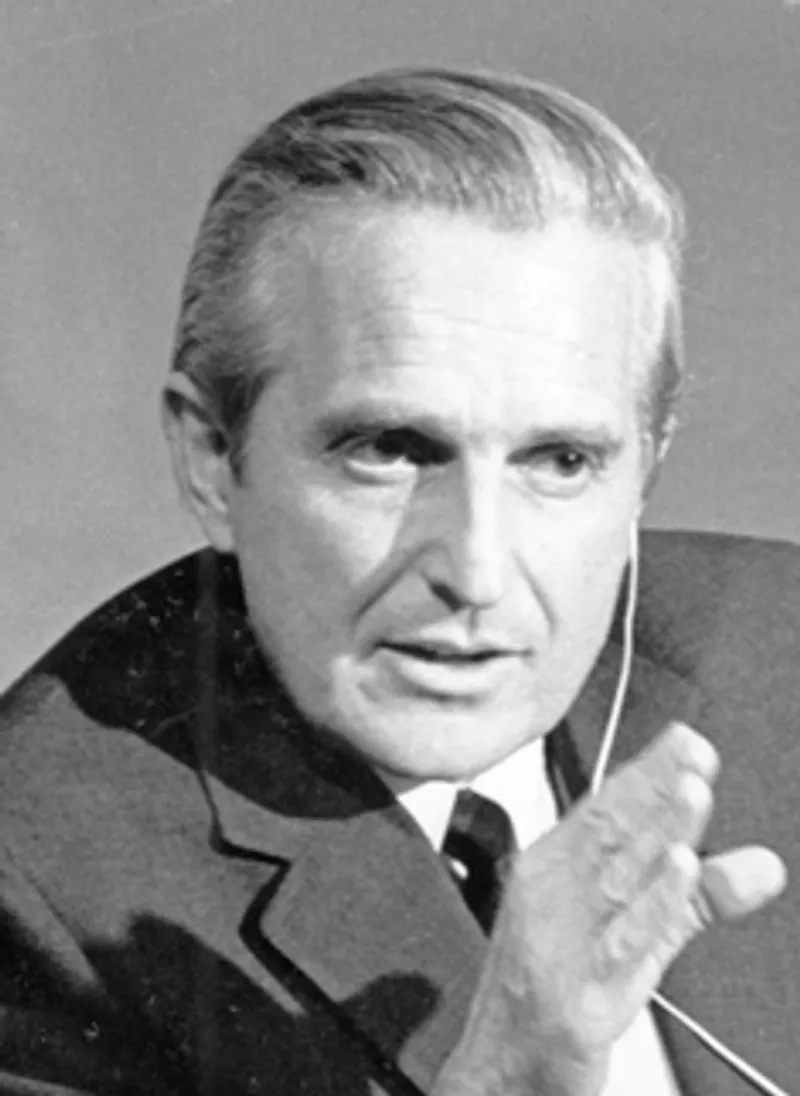
Douglas Engelbart (1925–2013) was an American engineer and inventor who pioneered interactive computing. His 1968 demonstration of the NLS system, later called “The Mother of All Demos,” introduced the computer mouse, hypertext, video conferencing, and collaborative editing—technologies that define modern computing.
Vision for Augmenting Human Intellect
Engelbart’s work was driven by a specific vision: using computers to augment human intelligence and help solve complex problems collectively. His seminal 1962 paper, “Augmenting Human Intellect,” outlined a framework for computer systems that would amplify human capabilities rather than replace them.
The Computer Mouse
Engelbart invented the computer mouse in 1964, calling it a mouse because the cord looked like a tail. The patent listed it as an “X-Y position indicator for a display system.” Though the mouse seems obvious now, it represented a radical shift from command-line interfaces to direct manipulation.
The Mother of All Demos
On December 9, 1968, at the Fall Joint Computer Conference in San Francisco, Engelbart gave a 90-minute demonstration that showed the future of computing. Working from Stanford Research Institute with a live video link, he demonstrated the mouse, hypertext links, real-time collaboration, and video conferencing to an audience of computer professionals.
Legacy
Though Engelbart’s vision was largely realized by others—many of whom worked with him and took his ideas to Xerox PARC, Apple, and beyond—his influence on computing is profound. He received the Turing Award in 1997 for his visionary work on interactive computing.